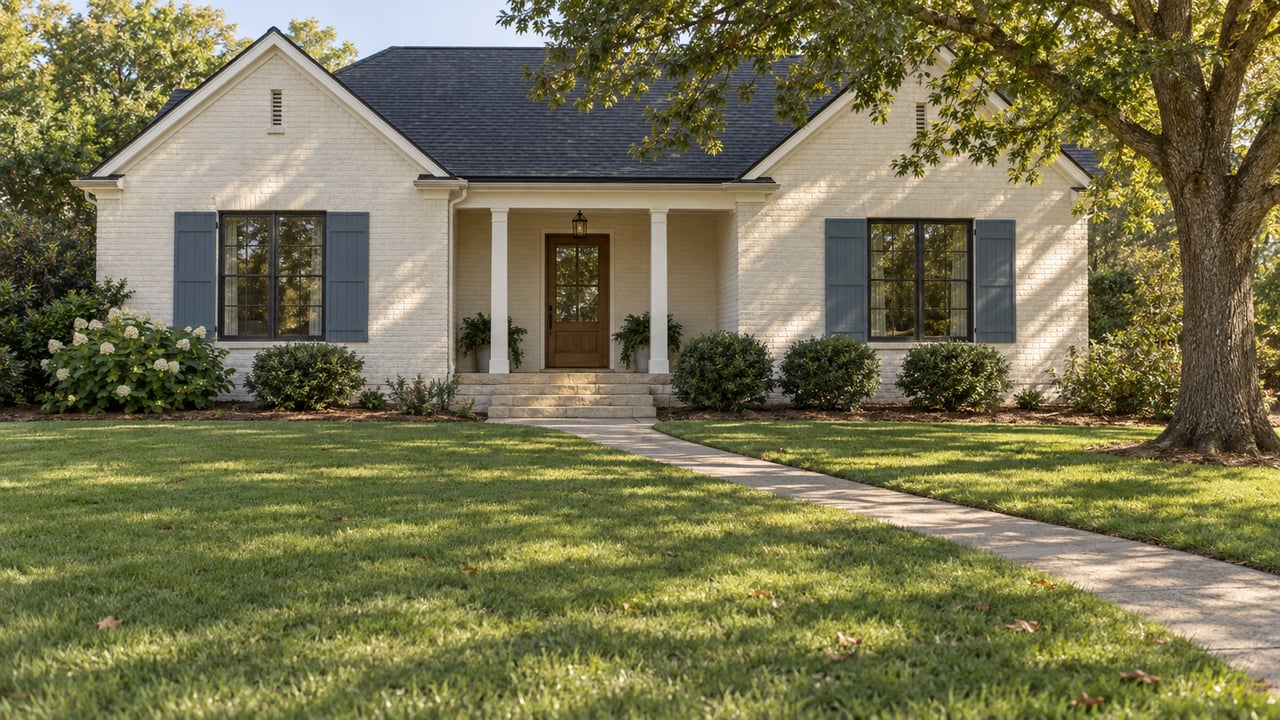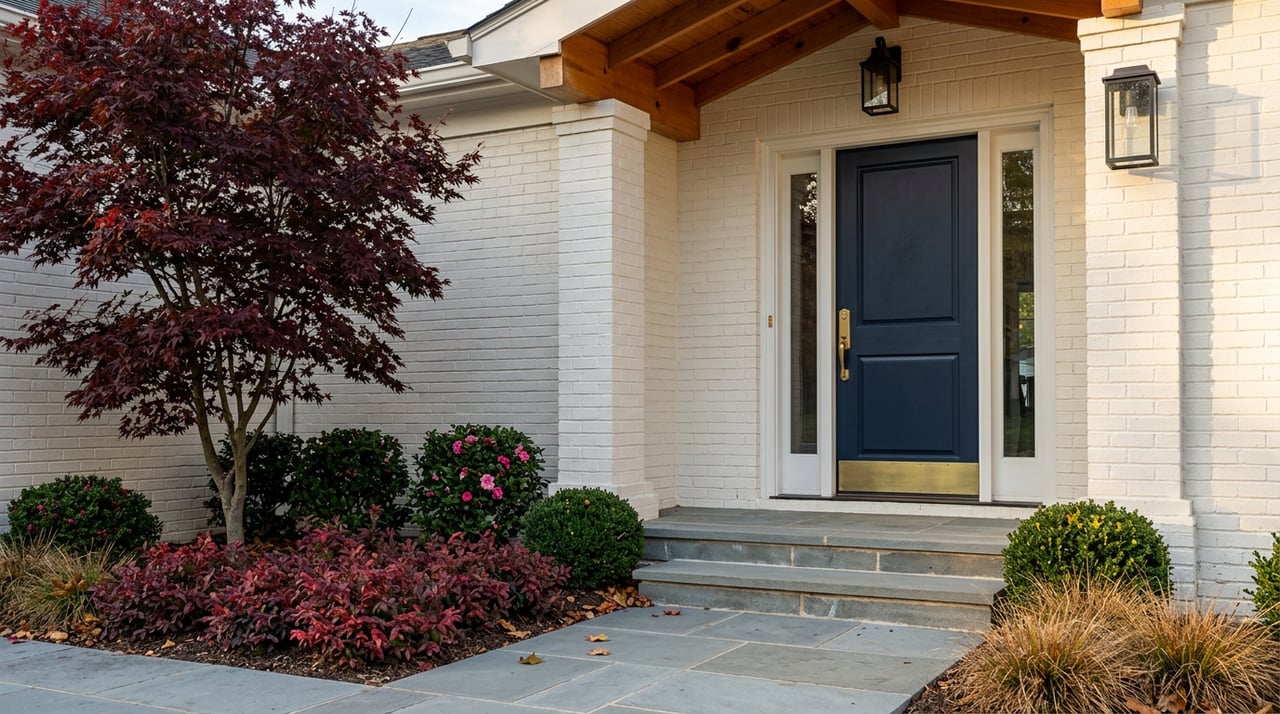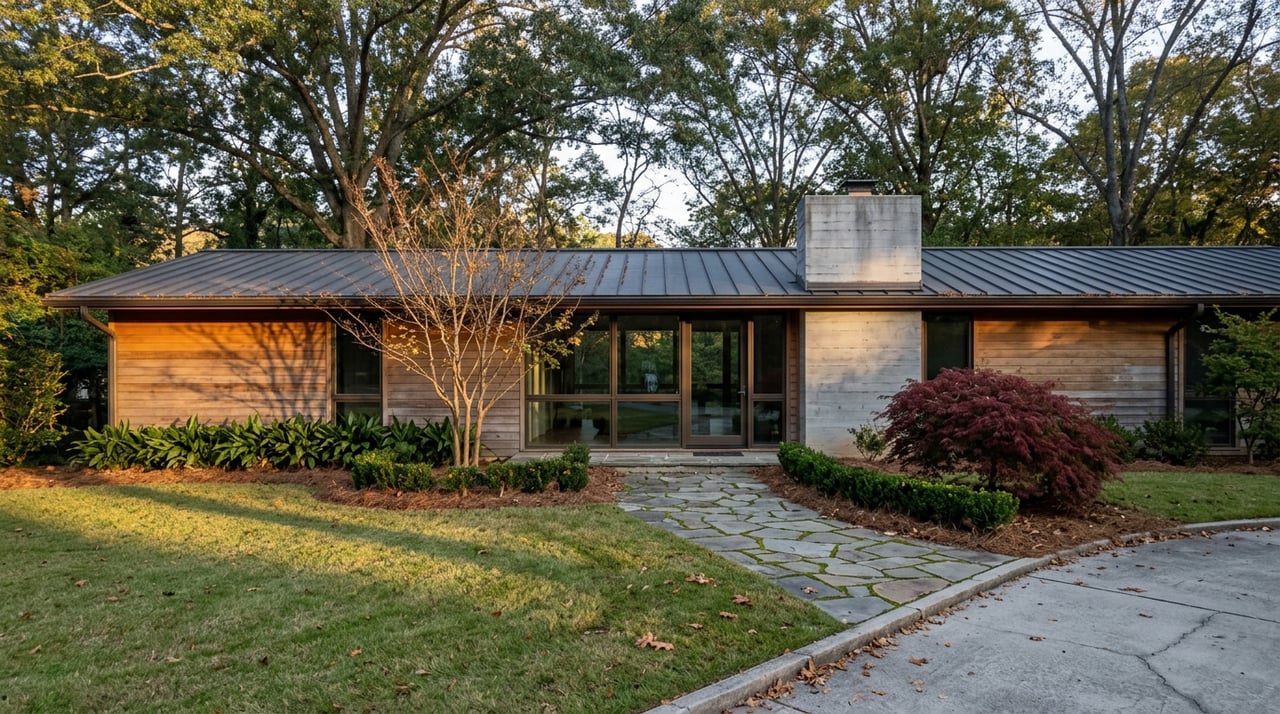
A buyer falls for a Parkins Mill listing with a wall of glass, a vaulted living room, and a lot that disappears into hardwoods. The photos look nothing like the brick Colonial Revival two doors down. The offer gets accepted. Then the appraisal comes back low, not because the house has problems, but because the appraiser can't find enough homes nearby that look anything like it.
This is not a fluke. It is a documented pattern in Greenville's Mid-Century Modern market, and Parkins Mill sits right at the center of it. A Post and Courier special report on the city's Mid-Century Modern homes found that these houses "can sometimes be tricky to appraise," because so much of their value lives in the architecture itself rather than in square footage or recent updates. When the comparable sales an appraiser needs are traditional brick estates, the number that comes back rarely reflects what a design-minded buyer was willing to pay.
The reason this matters for anyone comparing Parkins Mill to another Greenville neighborhood is simple: the median price you see on a listing site is quietly averaging four different housing products that do not compete with each other, do not appraise the same way, and do not attract the same buyer. Treat Parkins Mill as one market and you will misread both the price and the risk.
One Name, Four Built Environments
Ask someone to picture Parkins Mill and they will describe mature hardwoods, wide lots, and a brick estate with a circular drive. That picture is accurate for a large share of the neighborhood, but it is only one of four distinct pockets that all get sold under the same name.
The traditional core. These are the Colonial Revival and traditional brick homes most buyers associate with Parkins Mill, often on lots close to an acre, built across a long stretch of the twentieth century. They are the default comp, which means every other type of home in the neighborhood gets measured against them whether it fits or not.
The Hiller houses. Scattered on individual wooded lots throughout the area are Mid-Century Modern homes designed by the late Greenville architect Joe Hiller, known for sleek lines, vaulted ceilings, and walls of glass that blur the line between the house and the trees around it. Hiller worked across the Upstate for decades, and his homes show up often enough in Parkins Mill listings that agents specifically call out his name as a selling point. There is no cluster of them on one street. They sit quietly among the traditional homes, which is exactly what creates the comp problem.
Parkins Mill Village. This is a 21-homesite contemporary infill development tucked into a corner of the broader Parkins Mill area, built on a very different premise than the rest of the neighborhood. According to Post and Courier's coverage of the development, it grew out of a conversation between developer Matthew King and homeowners Cate and Tom Kassab, whose own modern-style home in Greenville had drawn interest from people who wanted something similar and had nowhere to buy it. Reini Construction was the initial contractor on the project. When Post and Courier profiled the enclave in late 2024, one of the available homes, 36 Village Crest Drive, was listed at $849,000 and featured a roof built to hide solar panels from the street. The point of the development was never to blend in. Cate Kassab told the paper the goal was to give buyers something Greenville's traditional housing stock simply did not offer.
The Preserve at Parkins Mill. A smaller, quieter enclave of roughly 27 custom homes built mostly between 2006 and 2009, this pocket leans Craftsman and Lowcountry, with architect Jack Thacker responsible for several of the notable designs and builders including Quinn and Satterfield and Oasis Custom Homes contributing distinctive properties. Lots here run smaller than the rest of Parkins Mill, and the enclave keeps its own character with deep eaves, exposed rafter tails, and wide front porches.
Here is what that looks like side by side.
| Sub-market | Defining style | Architect or builder of note | What sets it apart |
|---|---|---|---|
| Traditional core | Colonial Revival, brick estates | Varies by decade | The default comp for the whole neighborhood |
| Hiller houses | Mid-Century Modern | Joe Hiller | Scattered, not clustered, which is the appraisal issue |
| Parkins Mill Village | Contemporary infill | Developer Matthew King, builder Reini Construction | Built specifically to look different from its neighbors |
| The Preserve | Craftsman, Lowcountry | Architect Jack Thacker, builders Quinn and Satterfield, Oasis Custom Homes | Smaller custom enclave, distinct site plan |
Why This Becomes a Financing Problem, Not Just a Style Preference
An appraiser's job is to find recently sold homes that are genuinely comparable in size, condition, and style, then adjust from there. That system works well when a neighborhood is architecturally consistent. It struggles when a buyer is purchasing a Hiller-designed home surrounded by brick traditionals, because the nearest true comps might be miles away in a completely different Greenville pocket, or might not have sold recently at all.
"MCMs can sometimes be tricky to appraise."
That single line from Post and Courier's reporting on Greenville's Mid-Century Modern market captures the whole mechanism. It also explains something buyers often find confusing: these homes routinely draw strong offers and sell close to or above asking price, even when they need work, because the buyers who want them are shopping for the design first and the market comps second. The gap between what a motivated buyer will pay and what a formula-driven appraisal will support is where the friction lives.
The same logic touches Parkins Mill Village and The Preserve, just less severely, because both are self-contained developments with their own recent sales history. An appraiser working a Parkins Mill Village listing has other Parkins Mill Village sales to draw from. A buyer on a standalone Hiller house does not have that luxury, because there is no cluster of matching homes nearby.
What This Means If You're Comparing Neighborhoods
If you are cross-shopping Parkins Mill against a neighborhood like Augusta Road, the median price alone will not tell you what you are actually comparing. A traditional brick estate in Parkins Mill's core is a different transaction, with different risk, than a Hiller-designed home a few streets over, even if they list at similar prices per square foot.
A few things follow from that:
If you are drawn to a Mid-Century Modern home in Parkins Mill, build room into your offer strategy for a possible appraisal gap. That might mean a larger cash reserve, a conversation with your lender ahead of time about how they handle limited-comp properties, or language in your offer that addresses what happens if the appraisal lands below the contract price.
If you are selling a Hiller house or another architecturally distinctive property in the neighborhood, pricing it purely off the broader Parkins Mill median will undersell what makes it valuable, and pricing it purely off design enthusiasm without acknowledging the appraisal risk can create a deal that falls apart at financing. This is worth thinking through before you list, and it connects directly to the pricing patterns covered in our earlier look at why Parkins Mill's price data can't agree with itself, which found a similar mismatch driven by land sales getting averaged in with home sales.
If you are considering Parkins Mill Village or The Preserve specifically, you are buying into a smaller, more architecturally consistent market inside the larger neighborhood, which generally makes appraisals more straightforward than the scattered Hiller homes, but still distinct from the traditional core's comp pool.
Curious what your specific pocket of Parkins Mill is actually worth right now? A home valuation that accounts for which sub-market you're in, rather than the blended neighborhood median, is a better starting point than any online estimate.
A Few Questions Worth Asking Before You Write an Offer
Are Joe Hiller's homes in Parkins Mill protected as historic properties? Not that our research turned up. Unlike Greenville's Frank Lloyd Wright residence in North Main, which carries a National Register listing, Hiller's Parkins Mill homes trade as conventional single-family sales. That lack of formal designation is part of why they lean so heavily on an appraiser's discretion rather than a protected status that might smooth the process.
Is Parkins Mill Village governed by the same association as the rest of Parkins Mill? Parkins Mill isn't one platted subdivision with a single homeowners association. It's a broader established area, and enclaves like Parkins Mill Village and The Preserve at Parkins Mill are their own developments with their own site plans sitting inside that footprint. Anyone buying into one of the newer enclaves should confirm governance and any association details for that specific development rather than assuming it matches the neighborhood at large.
If an appraisal comes in low on an architect-designed home, is the deal dead? Not automatically. Buyers and sellers can negotiate a price adjustment, the buyer can bring additional cash to bridge the gap, or either side can request a second appraisal. None of that is guaranteed to work, which is exactly why it helps to anticipate the possibility before you're three weeks into a contract rather than after.
Parkins Mill rewards buyers who look past the single number on a listing page and sellers who price with their specific pocket of the neighborhood in mind. If you're trying to figure out which of these four markets a particular address actually belongs to, or what that means for your timeline and financing, Alison Pitts has walked enough Parkins Mill closings to know where the friction usually shows up. Let's Connect and talk through your specific address before you write the offer.
This article is general information, not legal, tax or financial advice. Consult a qualified professional about your situation.